














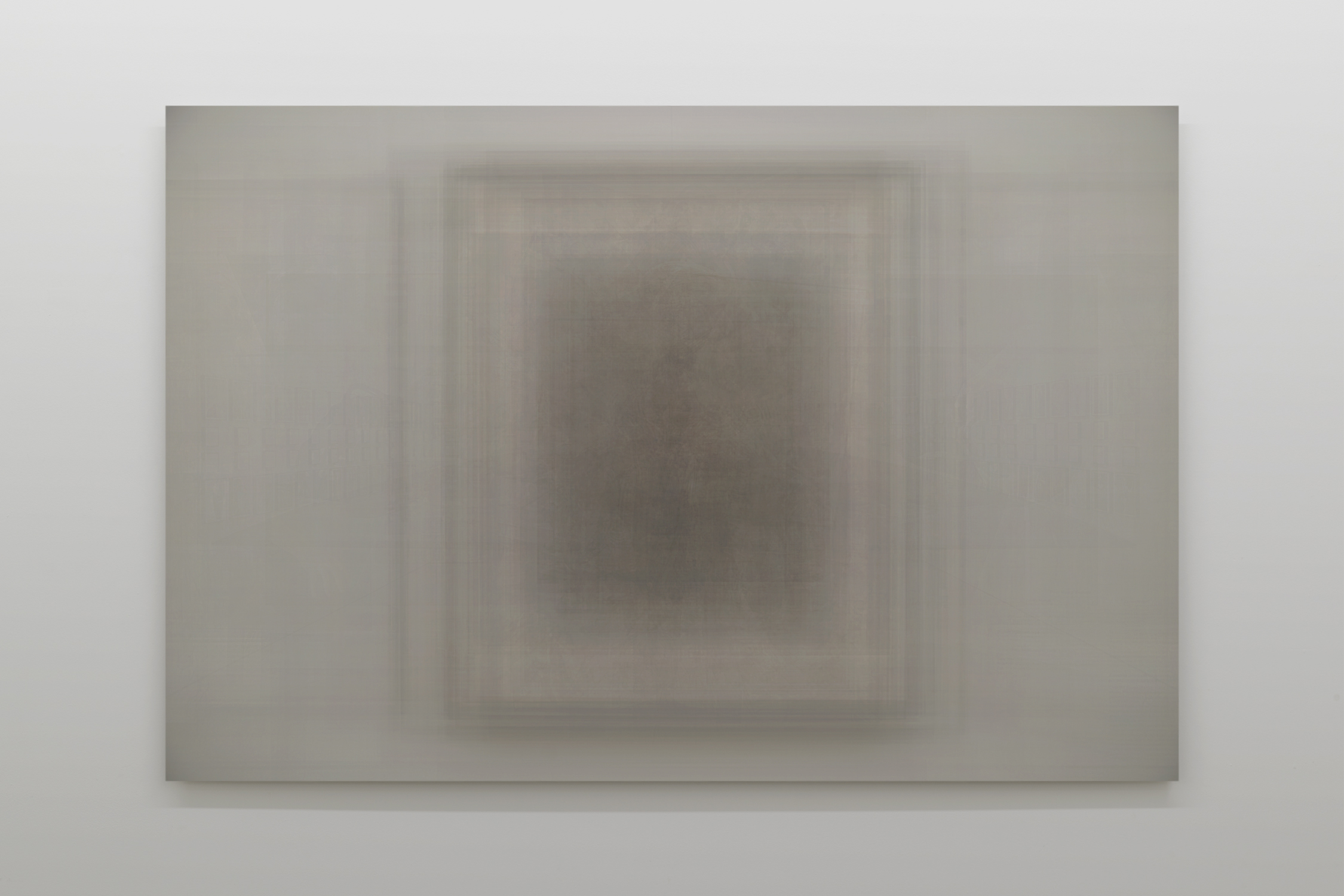
(La version française suit la version anglaise)
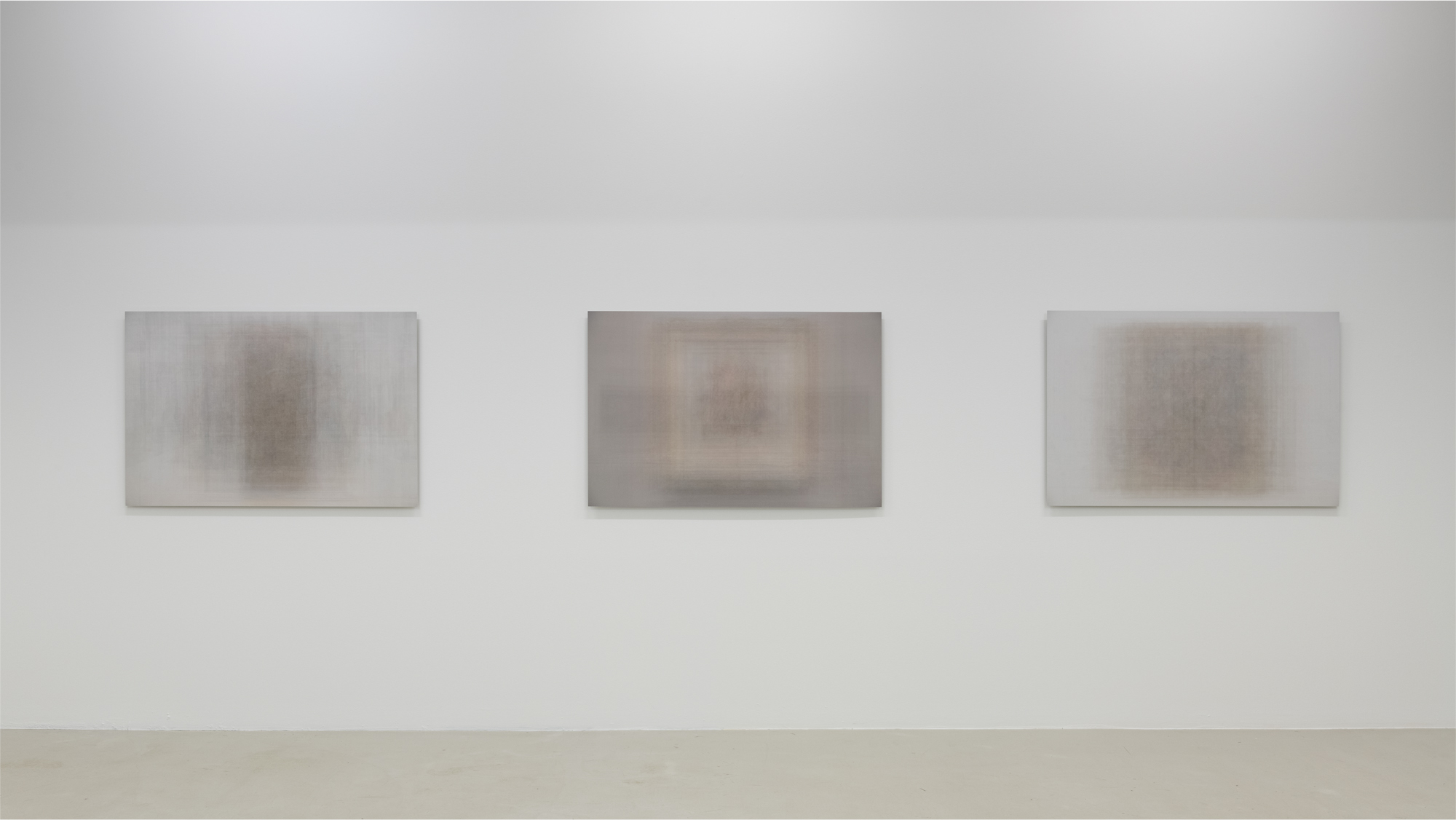
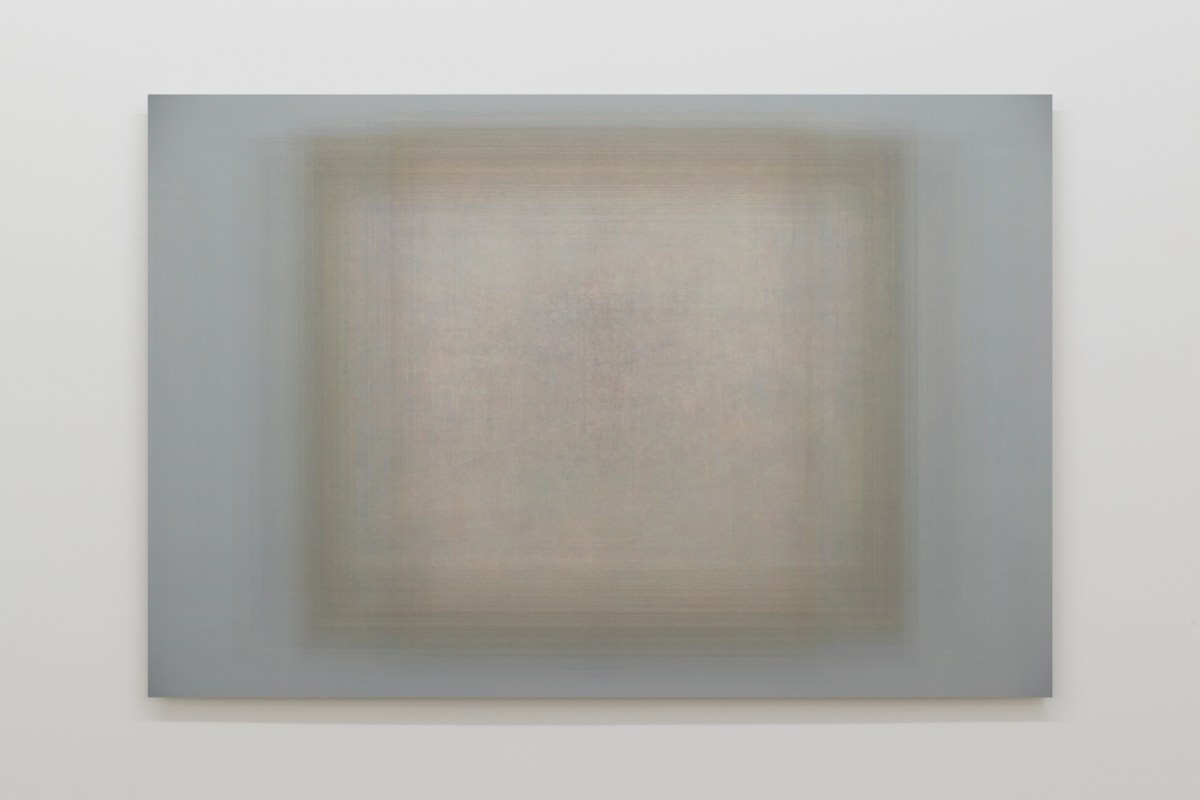
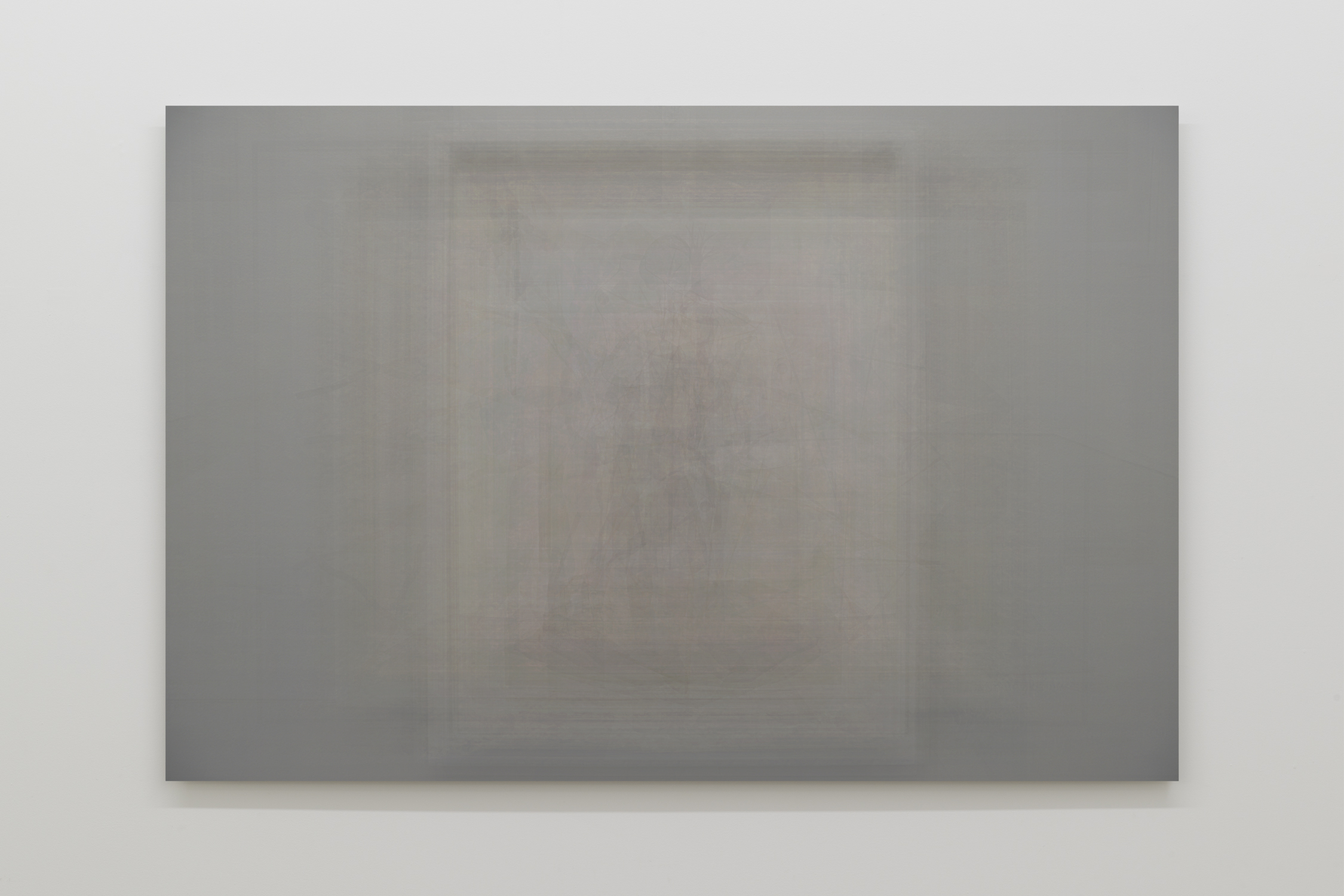
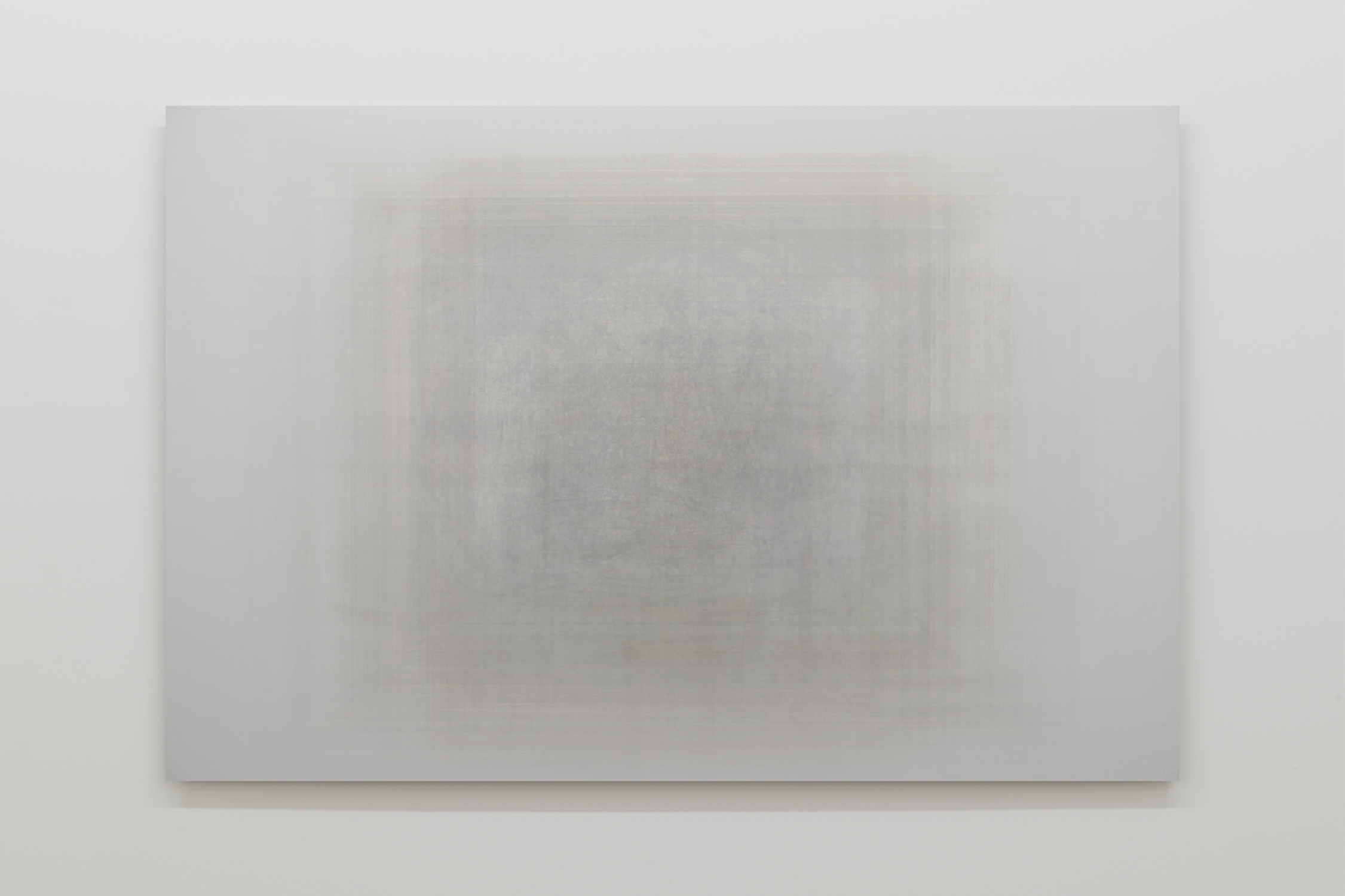
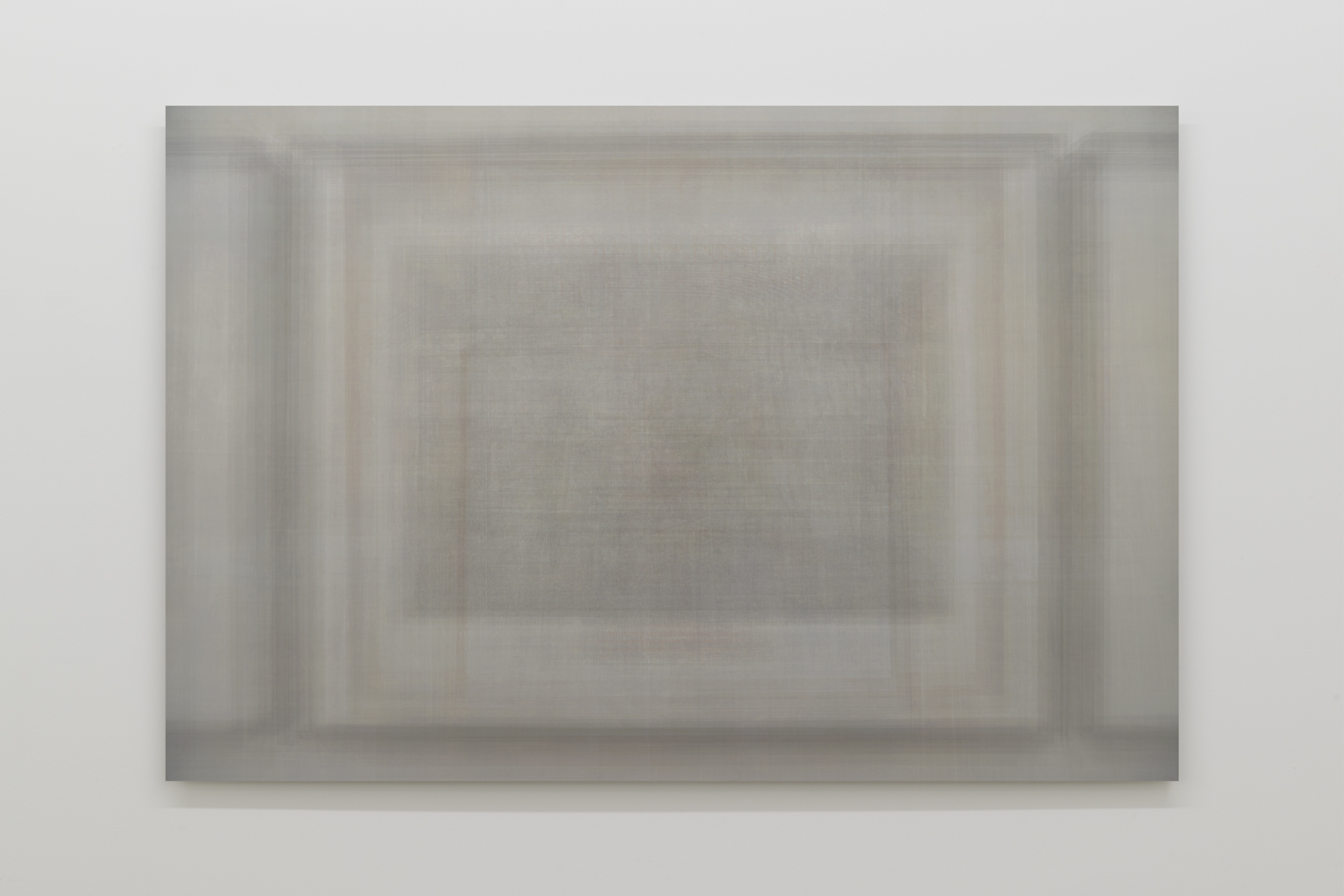
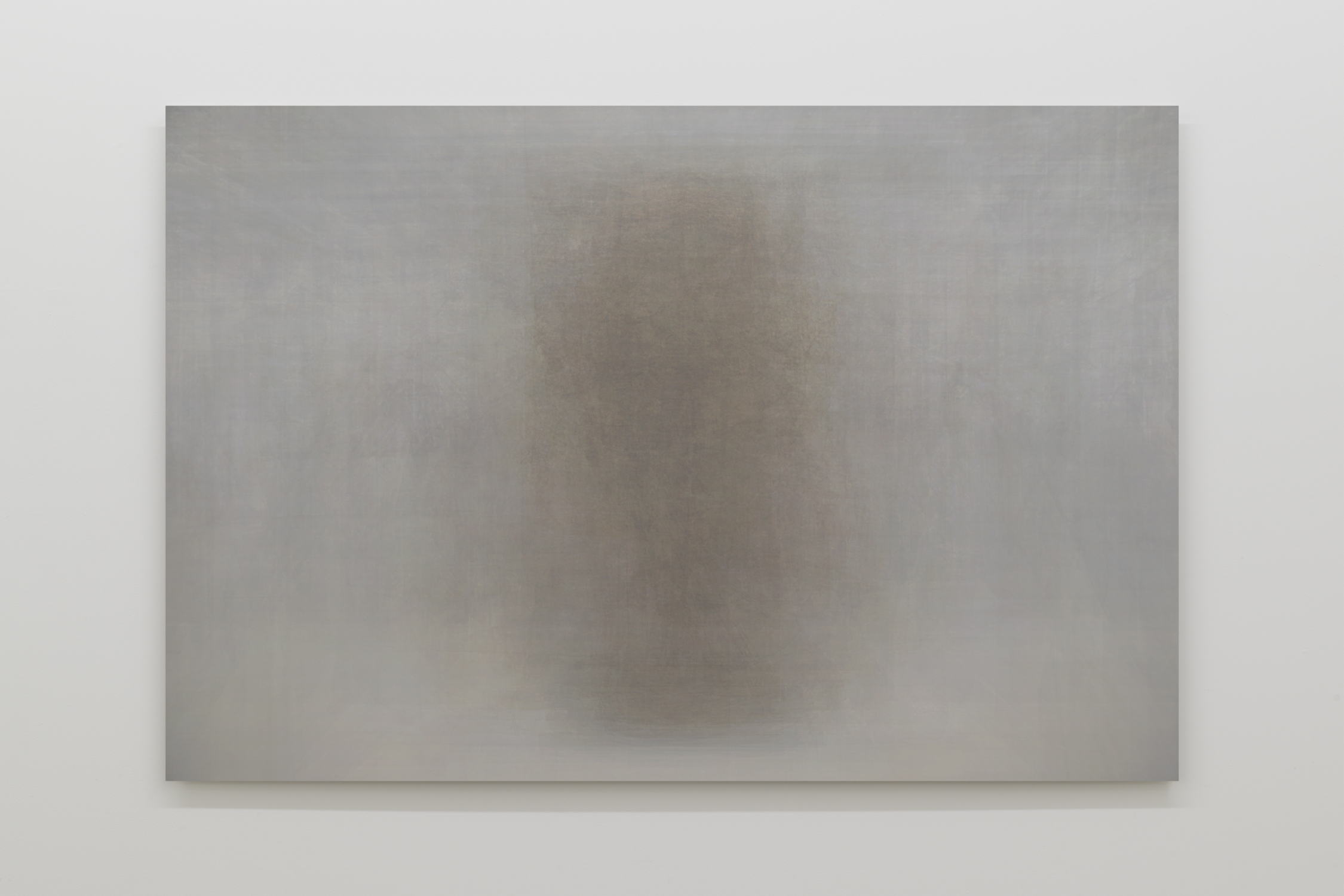
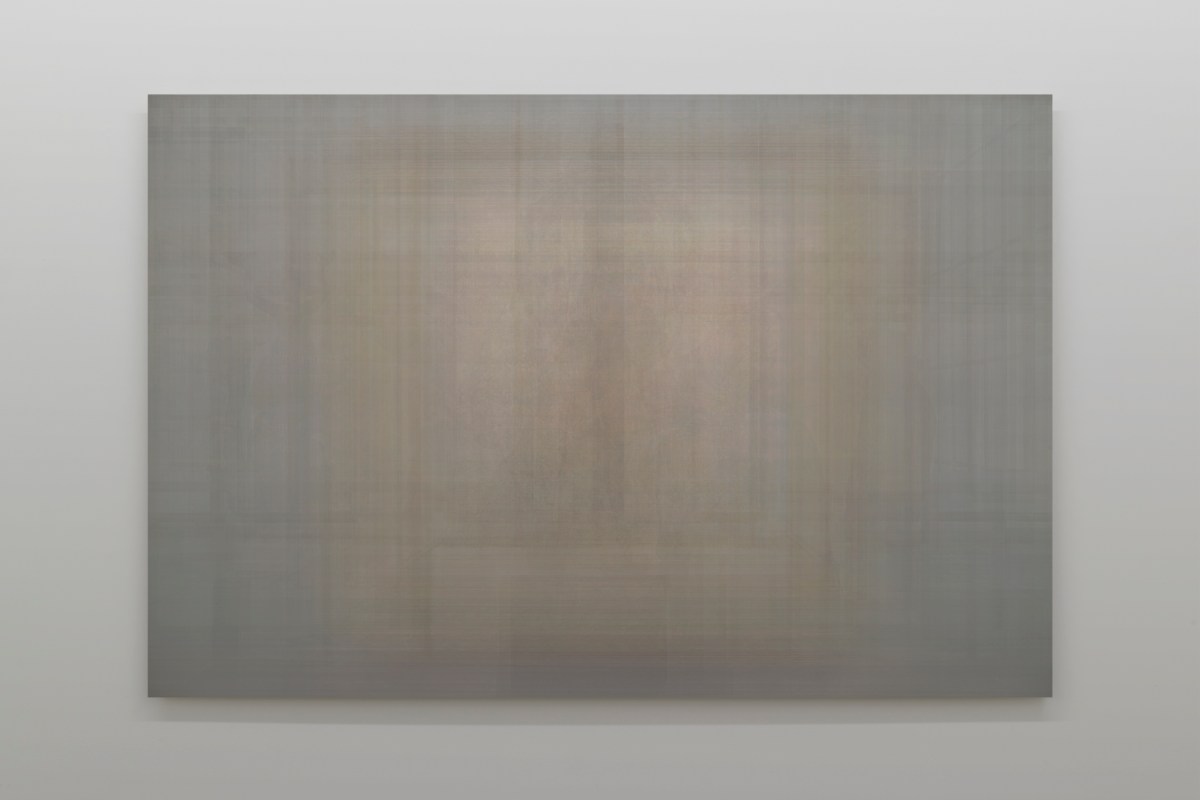
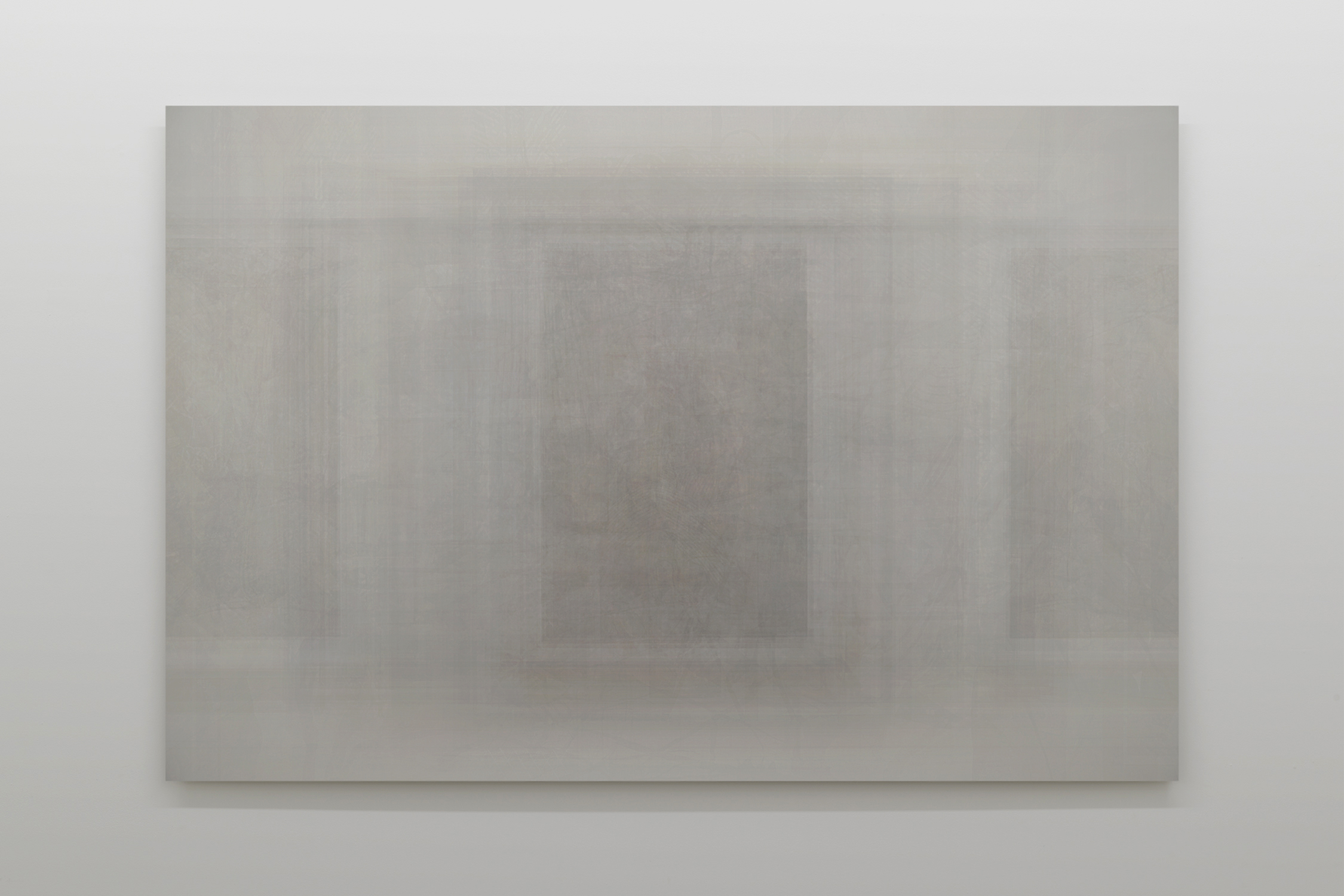
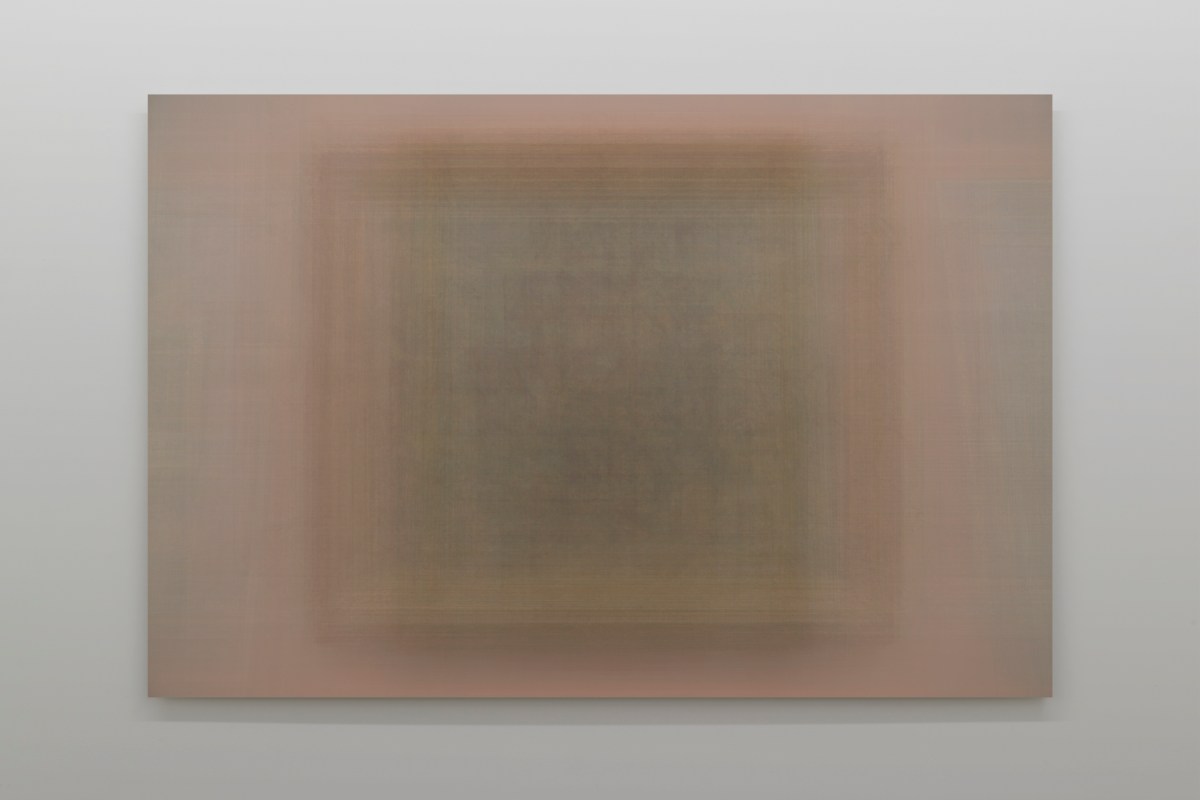
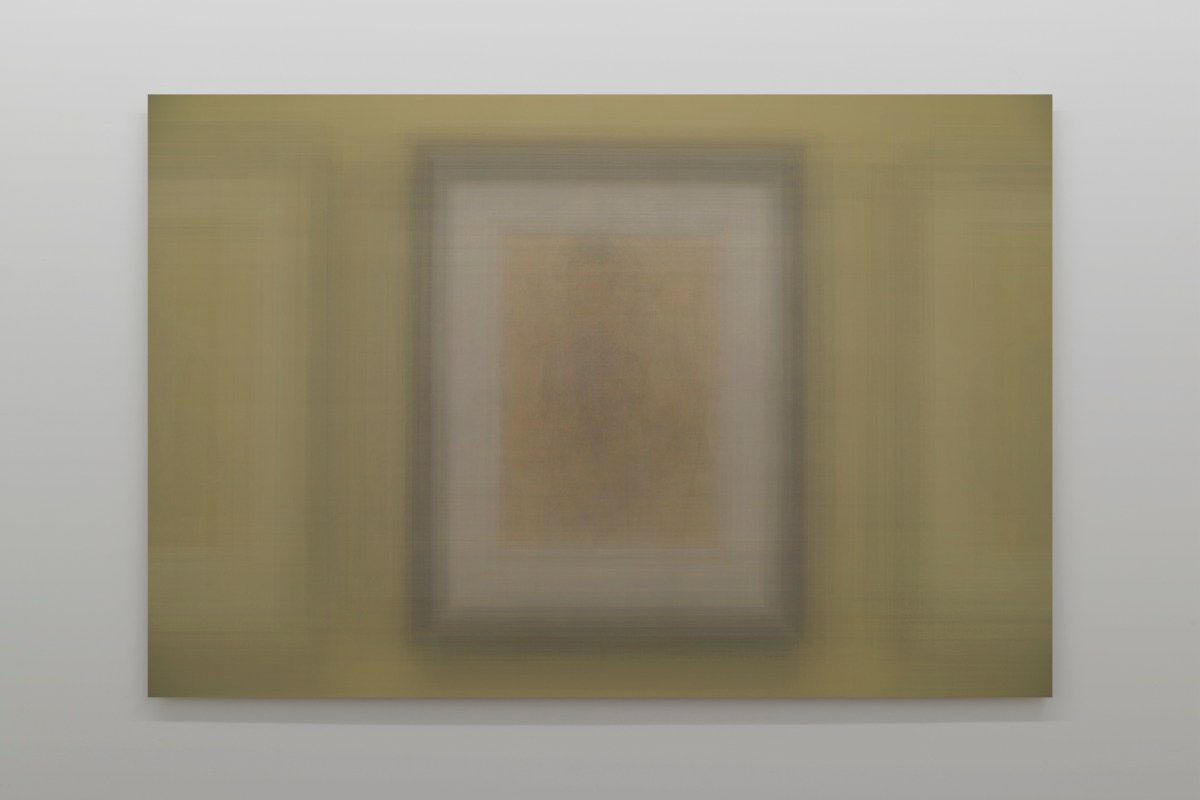
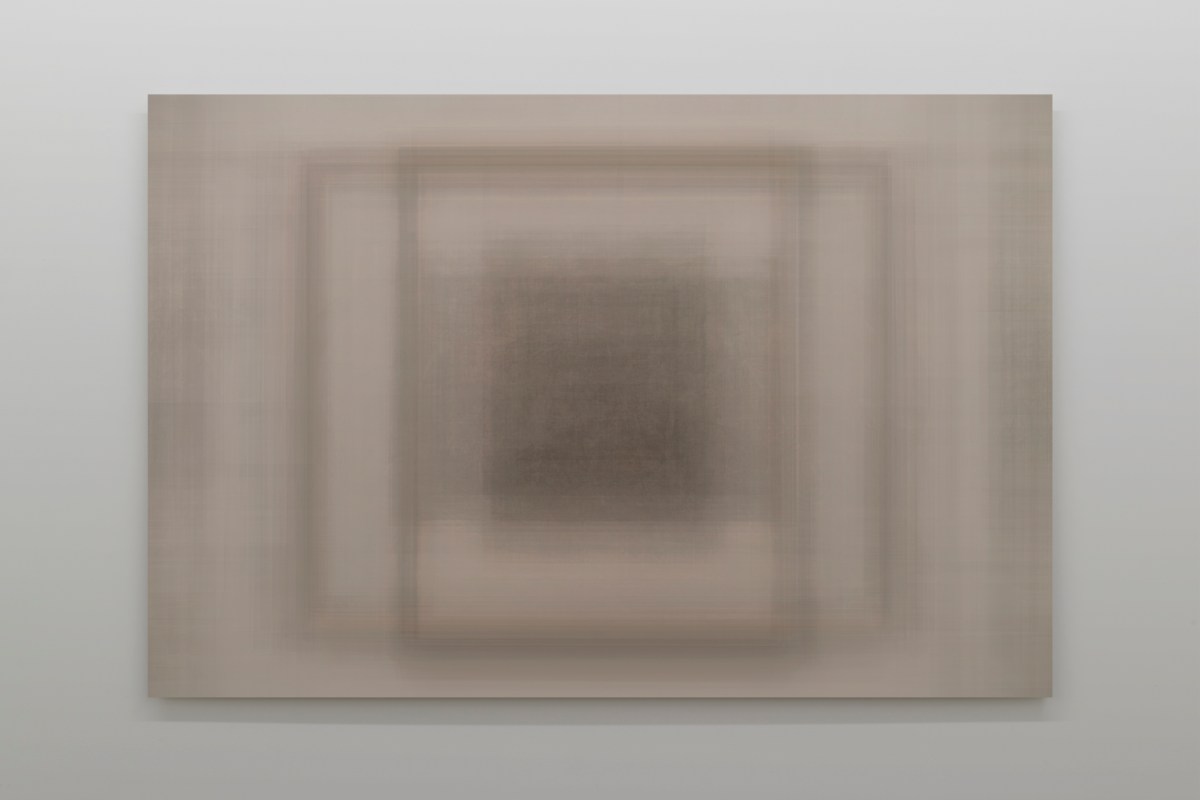
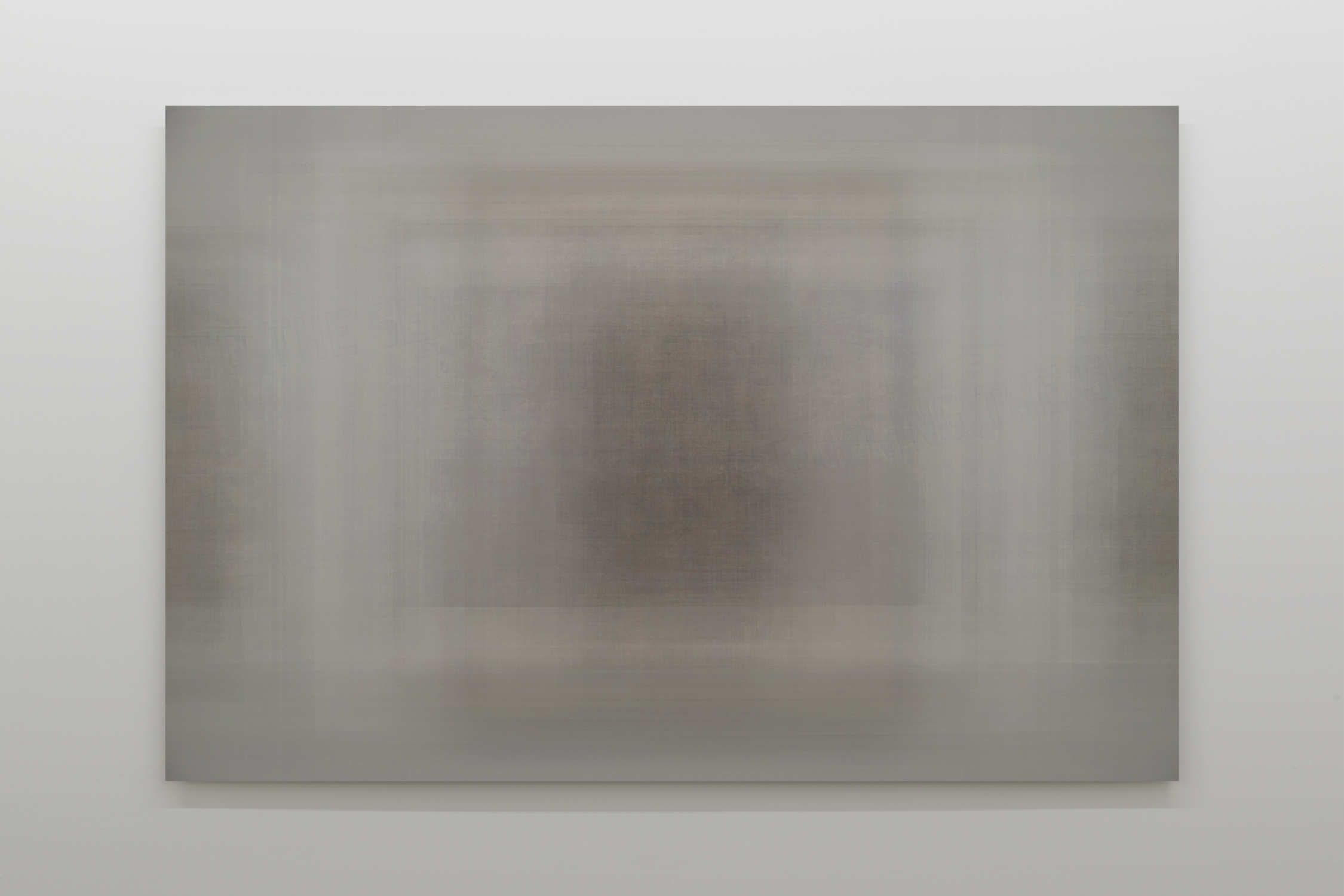
In 2017, I developed a protocol for creating an evolving work built from the digital superposition of all modern and current visual art works. I was then in Paris and methodically photographed each of the works presented in the Musée d’Orsay, Musée d’Art Moderne, Musée de l’Orangerie, Musée Picasso, Musée Rodin, Centre Georges Pompidou, and elsewhere. The work continues still, in other cities and other museums. I will continually superpose these photographs in a single digital file until full black is achieved. For each hundred works added, a new état [state] of Matière noire is produced; each état being simultaneously a work of its own and a fragment of the whole. According to the set protocol, I estimate that I will need to photograph around 150,000 works in order to reach my goal. At the moment, I have made around 40,000 photographs, of which 10,000 are grouped in états [States].
Matière Noire is an attempt at exhausting the act of photography. It is also the custodian of modernity and its legacy, echoing the works of many painters who have pared down their painting, often motivated by the wild—and utopian—desire to create a work that would be the sum of all works, or the last work, the last painting. The idea of the end summons all ends. Ultimately, Matière noire is a way of coming to grips with finitude. — Read Artist Statement.
Embracing Everything—Additional Notes
Sluggishness can be a form of resistance, and the body an antidote. Faced with the dematerialization of art and images, the acceleration of time, and the rise of algorithms, I decided to physically meet all the paintings, and all the works of art, as much to make them into my own material and as to appreciate, through a real experience, their full resonance, their materiality, their nuances and subtleties. In my daily life, I freed myself from the obligation to choose between making art or seeing art. In my practice, working with high-resolution files produces results that are impossible to achieve otherwise, whether from reproductions of works or from images gleaned off the web.
While Matière noire unfolds over a long period of time, the protocol dictating the stages of its realization is simple. On a technical level, this work is close to a form of digital craft, which in many ways is more akin to the practice of painting than to the creation of complex computer-generated images. Matière noire requires only the use of a digital camera and the execution of a few simple operations using common image-processing software, without programming or scripts.
As I travel, it is the shots taken in museums that condition both the content and the rendering of Matière noire. Strictly speaking, I do not choose the works that become my material. However, in front of each object, I must determine whether it is a work of modern or contemporary visual art, which obviously raises questions of categories and delimitations, and sometimes of my own limitations.
— THE PROTOCOL (03.11.2017) —
Working protocol for the production of an evolving photographic work that superposes and encapsulates all modern and contemporary visual works until full black is achieved, or my existence comes to an end.* One hundred works from the exhibition Being Modern: MoMa in Paris, presented at Fondation Louis Vuitton, will constitute the starting point and état 1 (or State 1) of this work, titled Matière Noire.
Protocol description :
1 — Take a full frontal shot of each work in the exhibition, without trying to exclude presentational apparatus (frames, pedestals, etc.) and the inevitable architectural elements. When crowds are thick, visitors may also find themselves in the camera’s field of view. Framed horizontally, the photographs will be produced by simply following the course of the exhibition.
2 — By digitally processing the work-images,** superpose transparencies of the first hundred works of the exhibition to create a single image. The opacity of each work-image will be reduced to 1%, for a total cumulated value of 100%.
3 — The image thus obtained constitutes State 1 of Matière Noire. It will be saved to a digital support and may be printed. The remaining work-images, if any, will be incorporated in the next stage of the work.
For the following states :
4 — Following the procedure set out in point 1, photograph a hundred modern or contemporary works presented in a museum or foundation.
5 — From this new set of work-images, apply the procedure set out in point 2.
6 — Merge this new set of work-images with all previous states, converted in multiplied layers, each of which will have had its opacity reduced to 1%. The image thus obtained constitutes the next state in Matière Noire. This image will be saved to a digital support and may be printed.***
7 — Repeat procedures 4, 5 and 6 until full black is achieved. Each stage will simply be titled Matière Noire, état x (x = 1 to ∞).
* Achieving full black is hypothetical. In theory, the superposition and fusion of each stage in Matière Noire should generate an ever-darker, ever-more-dense image. Produced by an accumulation of strata, this density is nonetheless dependent on the work-images of which it is composed, work-images that are themselves diluted into each other. One may predict, for example, that the incorporation of one or more works by someone like Pierres Soulages would have a greater effect than of those of a Robert Ryman. And yet, while the protocol on which Matière Noire is based may be rigorously defined, the nature and sequencing of the body of work-images remains fundamentally unpredictable.
** Here I use the concept of the work-image to distinguish the digital files created by photographing a work—to be accrued as the material for Matière Noire—from simply an image or an existing work. It also suggests a lack of differentiation between the photograph of the work and the photographed work, which here form a unity, much like a unit of measurement: one work = one photo = one percent of a stage in Matière Noire.
*** Note that the results obtained from applying procedures 4 and 5 will also be saved to a digital support and can be printed, thus forming a body of work independent from, but parent to Matière Noire. These works will be titled Gris x (x = 1 to ∞).
Museums, collections and exhibitions included in Matière noire (in french and english):
2017 — PARIS — Fondation Louis Vuitton: Etre moderne: le MoMA à Paris — Musée Rodin: Collections permanentes — Musée Picasso: Picasso 1932. Année érotique ; Les Picasso de Picasso ; Picasso et sa collection personnelle ; Picasso 1947. Un don majeur au Musée national d’Art Moderne — Centre Pompidou: André Derain 1904-1914. La décennie radicale ; Collections permanentes ; César — Musée de la chasse et de la nature: Sophie Calle et son invitée Serena Carone, Beau doublé, Monsieur le marquis ! — Musée d’art moderne de la ville de Paris: Nouvelle Présentation. Collections permanentes — Grand palais: Gaugin l’alchimiste — Musée de l’Orangerie: Dada Africa, sources et influences extra-occidentales ; Collections permanentes — Musée Marmottan: Monet collectionneur ; Collections permanentes — Fondation Ricard: Duographie, Maurice Blaussyld & Samuel Richardot — Musée d’Orsay: Collections permanentes (œuvres modernes et contemporaines).
2018 — PARIS — Fondation Louis Vuitton: Egon Schiele, Jean-Michel Basquiat — Musée Picasso: Picasso. Chefs-d’œuvre ! — Centre Pompidou: Le cubisme ; Une avant-garde polonaise – Katarzyna Kobro et Wladyslaw + Strzeminsky ; Franz West — Lafayette Anticipation: Simon Fujiwara — Musée de l’Orangerie: Les contes cruels de Paula Rego ; Contrepoint contemporain / Richard Jackson, Paintings ; Collections permanentes (Chaim Soutine) — Musée Marmottan: Collections privées. Un voyages des impressionnistes aux fauves — Musée d’art moderne de la ville de Paris: Ron Amir, Quelque part dans le désert ; Zao Wou-Ki, L’espace est silence — MacVal: Mélanie Blanchot, Open ended now ; Persona grata ; Collections permanentes — Institut Giacometti: Annette Messager / Alberto Giacometti, Nos chambres — Grand Palais: Miro — Jeu de Paume: Dorothea Lange, Politiques du visible — Petit palais: Valérie Jouve ; Collections permanentes (œuvres modernes et contemporaines) — COLD SPRING — Magazzino Italian Art: Arte Povera: From the Olnick Spanu Collection — BEACON — DIA Beacon: Collection Display: John Chamberlain, Dan Flavin, Donald Judd, Michael Heizer, On Kawara, Blinky Palermo: To the People of New York City, Michelle Stuart, Mary Corse, Dorothea Rockburne, Imi Knoebel, Louise Lawler, Sol Lewitt, Bruce Nauman, François Morellet: No End Neon, Gerhard Richter, Robert Ryman, Richard Serra, Fred Sandback, Robert Smithson, Anne Truitt — NEW YORK — Solomon R. Guggenheim Museum: Giacometti ; Brancusi Collection ; Thannhauser Collection ; One Hand Clapping — Whitney Museum of American Art: Where We Are: Selections from the Whitney’s Collection, 1900–1960 ; Mary Corse: A Survey in Light ; The Face in the Moon: Drawings and Prints by Louise Nevelson — Brooklyn Museum: Half the Picture: A Feminist Look at the Collection ; Infinite Blue (modern and contemporary artworks) ; Rob Wynne: FLOAT — MoMA PS1: Artist interventions ; Julia Phillips, Failure Detection ; Projects 108. Gauri Gill ; Fernando Palma Rodríguez, In Ixtli in Yollotl, We the People ; Land: Zhang Huan and Li Binyuan ; Body Armor (Maryam Hoseini, Zadie Xa, Delilah Montoya, and Ana Pellicer) ; Seth Price: Danny, Mila, Hannah, Ariana, Bob, Brad ; Sue Coe: Graphic Resistance ; Walter Price ; Elle Pérez: Diablo — MONTREAL — Musée d’art contemporain de Montréal: Rafael Lozano-Hemmer. Présence instable ; Tableau(x) d’une exposition — Musée des beaux-arts de Montréal: D’Afrique aux Amériques: Picasso en face à face, d’hier à aujourd’hui ; Nous sommes ici, d’ici: L’art contemporain des Noirs canadiens ; Jean-Michel Othoniel. Motion – Émotion ; Collections permanentes (œuvres modernes et contemporaines) — QUEBEC — Musée national des beau-arts du Québec: Marcel Barbeau. En mouvement ; Fait main / Hand Made ; Berthe Morisot. Femme impressionniste ; D’où venons-nous? Que sommes-nous? Où allons-nous? ; De Ferron à BGL. Art contemporain du Québec ; David Altmejd. The Flux and the Puddle ; Jean-Paul Riopelle. L’Hommage à Rosa Luxemburg / Métamorphoses ; Jean-Paul Lemieux. De silence et d’espace ; Alfred Pellan. Le rêveur éveillé ; Fernand Leduc. Peintre de lumière ; Rafael Lozano-Hemmer. Solar Equation — OTTAWA — Musée des beaux-arts du Canada: Anthropocène ; Exposition du Prix Sobey pour les arts ; Paul Klee. La collection Berggruen du Metropolitan Museum of Art ; Le port d’Halifax en 1918 ; Collections permanentes (œuvres modernes et contemporaines).
2019 — MONTREAL — Musée des beaux arts de Montréal: Calder : Un inventeur radical ; Omar Ba. Vision partagée ; Simulacres : Alinka Echeverría ; États d’âmes, esprit des lieux ; Peintures barbares: hommage à Jean McEwen — Musée d’art contemporain de Montréal : Francis Alÿs. Children’s Games ; Alain Paiement. Bleu de bleu ; Luis Jacob et Serge Tousignant. Je vois ce que tu regardes ; William Kentridge. Second-hand Reading ; Gisele Amantea. Faux site ; Janet Werner ; Ragnar Kjartansson. A Lot of Sorrow ; Rebecca Belmore. Braver le monumental ; Nadia Myre ; Chloë Lum & Yannick Desranleau ; Julian Rosefeldt. Manifesto ; Françoise Sullivan ; Sophie Jodoin. Toi que jamais je ne termine ; Tableau(x) d’une exposition — QUEBEC — Musée national des beau-arts du Québec: Miró à Majorque. Un esprit libre ; COZIC, À vous de jouer — JOLIETTE — Musée de Joliette : Marina Gadonneix. Phénomènes ; Patrick Coutu. L’attraction du paysage ; Collections permanentes (œuvres modernes et contemporaines) — NEW YORK — Whitney Museum of American Art: Andy Warhol—From A to B and Back Again ; Programmed: Rules, Codes, and Choreographies in Art, 1965–2018 ; Kevin Beasley: A view of a landscape ; Rachel Harrison. Life Hack ; Alan Michelson: Wolf Nation ; Jason Moran ; Spilling Over: Painting Color in the 1960s ; Whitney Biennial 2019 — The Met Fifth Avenue: Epic Abstraction: Pollock to Herrera ; Permanent collections (modern and contemporary works) — The Met Breuer: Julio Le Parc 1959 ; Home Is a Foreign Place: Recent Acquisitions in Context ; Vija Celmins: To Fix the Image in Memory — MoMA: Bruce Nauman. Disappearing Acts ; Projects 195. Park McArthur ; Charles White. A Retrospective ; Constantin Brancusi Sculpture ; The Long Run ; If Everything Is Sculpture Why Make Sculpture? Artist’s Choice: Peter Fischli ; Surrounds 11 Installations ; member: Pope.L, 1978–2001 ; Sur moderno: Journeys of Abstraction—The Patricia Phelps de Cisneros Gift ; Artist’s Choice: Amy Sillman. The Shape of Shape ; Haegue Yang. Handles ; Taking a Thread for a Walk (selected works) ; Collection 1880s–1940s ; Collection 1940s–1970s ; Collection 1970s–Present ; Architecture & Design at the New MoMA (selected works) ; Betye Saar: The Legends of lack Girl’s Window — MoMA PS1: Bruce Nauman, Disappearing Acts ; Simone Fattal: Works and Days ; Devin Kenny: rootkits rootwork ; Julie Becker: I must create a Master Piece to pay the Rent ; Hock E Aye Vi Edgar Heap of Birds: Surviving Active Shooter Custer ; Gina Beavers: The Life I Deserve ; MOOD: Studio Museum Artists in Residence 2018-19 ; Theater of Operations. The Gulf Wars 1991–2011 — Solomon R. Guggenheim Museum: Hilma af Klint: Paintings for the Future ; R. H. Quaytman: + x, Chapter 34 ; Artistic License: Six Takes on the Guggenheim Collection ; Implicit Tensions: Mapplethorpe Now — New Museum: Hans Haacke: All Connected — The Shed: Agnes Denes: Absolutes and Intermediates.
2020 — BASEL — Kunstmuseum Basel (Neubau, Gegenwart, Hauptbau): Picasso, Chagall, Jawlensky, Masterworks of the Im Obersteg Collection ; Jawlensky and Soutine, Witnesses of a torn century ; Grand Gestures, Four Decades of Swiss Abstraction ; Continuously Contemporary, New works from the Emanuel Hoffmann Foundation ; Four Years, Gifts and Acquisitions ; Permanent collections (modern and contemporary works) — Musée Tinguely: Amuse-bouche. The Taste of Art ; Permanent collections.
2021 — ZÜRICH — Kunsthaus Zürich: William Forsythe, The Sens of Things ; Gerhard Ritcher, Landscape ; Permanent collections (modern and contemporary works) ; Musée Haus Konstruktiv: RESET, Museum. Collection. Future. — Migros Museum für Gegenwartskunst: Potential Worlds 2: Eco-Fictions ; Kunsthalle Zürich: Pati Hill, Something other than either ; Jacqueline Fraser — BERN — Kunstmuseum Bern: Permanent collections (modern and contemporary works) — Kunsthalle Bern: Lose Enden — Zentrum Paul Klee: Mapping Klee ; Departure without Destination. Annemarie Schwarzenbach as photographer — LAUSANNE — Musée cantonal des Beaux-Arts: Maurice Denis. Amour ; Matières en lumière – Sculptures de Rodin à Louise Bourgeois ; Anne Rochat. In Corpore, Prix culturel Manor Vaud 2020 — Musée de Pully: Calder, Soulages, Vasarely… Abstractions Plurielles (1950-1980), Collection de la Fondation Gandur pour l’Art ; La Fondation de l’Hermitage: Chefs-d’œuvre de la collection Bemberg — LUCERNE — Kunstmuseum Luzern: Rinus Van de Velde, I’d rather stay at home ; Micha Zweifel ; Werden und Vergehen, Zustandsberichte aus der Sammlung ; Ferdinand Hodler’s Woodcutter ; Vivian Suter, Retrospective — GENEVA — MAMCO: Inventaire — BASEL — Kunstmuseum Basel (Neubau, Gegenwart): Sophie Taeuber-Arp, Living Abstraction ; Dorian Sari, Post-Truth — Beyeler Foundation: Life by Olafur Eliasson ; Rodin/Arp ; Close-up — Kunsthalle Basel: Lydia Ourahmane, Barzakh ; Joachim Bandau, Die Nichtschönen: Works 1967–1974 — Kunsthaus Baselland; Afterlight. Afterglow, Video Installations and their Pioneers — HEK: Shaping the Invisible World, Digital Cartography as an Instrument of Knowledge — Tinguely Museum: Impasse Ronsin, Murder, Love and Art in the Heart of Paris — KBHG: Tree connections — PARIS — Centre Pompidou: Baselitz – La rétrospective ; Georgia O’Keeffe — Musée de l’Orangerie: Chaïm Soutine/Willem de Kooning, la peinture incarnée — MADRID — Reina Sofia Museum: Moroccan Trilogy 1950-2020 ; The Kind Cruelty – León Ferrari, 100 Years ; Charlotte Johannesson, Take Me to Another World ; Permanent collections — Palacio de Velázquez: Anna-Eva Bergman, From North to South, Rhythms — Thyssen-Bornemisza National Museum: Alberto Reguera. Homage to Aert van der Neer ; Permanent collections (modern and contemporary works).
2022 — MONTREAL — Musée des beaux-arts de Montréal: L’univers de Yousuf Karsh. L’essence du sujet ; Combien de temps faut-il pour qu’une voix atteigne l’autre? — QUEBEC — Musée national des beau-arts du Québec: Lemoyne. Hors jeu ; Stanley Février. Menm vue tintin. Les vies possibles — LUCERNE — Kunstmuseum Luzern: Polly Apfelbaum, Josef Herzog ; Nathalie Djurberg & Hans Berg. Delights of an Undirected Mind ; Through space and time, Artistic universes from the collection — BASEL — Kunstmuseum Basel (Neubau, Gegenwart, Hauptbau): Louise Bourgeois x Jenny Holzer, The Violence of Handwriting Across a Page ; Variation in Print, American Graphic Art ; Brice Marden, Inner Space ; Heute Nacht geträumt, An exhibition by Ruth Buchanan ; Picasso – El Greco (Picasso only) — Beyeler Foundation: Passages – Paysage, figure et abstraction — PARIS — La Bourse de Commerce – Pinault Collection: Nobuyoshi Araki ; Bertrand Lavier ; Protest Sounds ; Charles Ray ; David Hammons ; Stan Douglas — Musée du Luxembourg: Pionnières, Artistes dans le Paris des Années folles — Musée d’art moderne de la ville de Paris: Donation d’œuvres de Georg Baselitz ; Joseph Beuys. Ligne à ligne, feuille à feuille — Fondation Louis Vuitton: La Collection Morozov. Icônes de l’art moderne — VIENNA — Albertina Modern: Egon Schiele and his Legacy ; Ai Weiwei, In Search of Humanity ; Permanent Collections — Albertina Museum: Ben Willikens. Cold-Chambers ; Edvard Munch. In Dialogue ; Michela Ghisetti ; Black White & Grey ; Permanent Collections (modern and contemporary works) — MUMOK: Friedrich Kiesler, Endless House ; Siegfried Zaworka, Funktionale ; Enjoy, The mumok Collection in Change ; Huang Po-Chih, Blue Elephant ; Wolfgang Tillmans, Sound is Liquid ; Hans Schabus‘s Cafe Hansi — Upper Belvedere: Face to Face, Marc Quinn meets Franz Xaver Messerschmidt ; True to Life, Realist Painting from 1850 to 1950 (modern and contemporary works) ; Lena Henke, Aldo Rossi’s Sleeping Elephant — Lower Belvedere: Dalí–Freud. An Obsession — Belvedere 21: Embodied Structures — Kunst Haus Wien/Hunderstwasser Museum: When the wind Blows ; Permanent Collections — Loepold Museum: Ludwig Wittgenstein, Photography as analytical practice ; Vienna 1900, Birth of Modernism ; The Schedlmayer Collection ; Permanent Collections — Secession Museum: Gustav Klimt, Beethoven Frieze ; DIS, How To Become A Fossil ; Dineo Seshee Bopape, Lerato le le golo (…la go hloka bo kantle) ; Siggi Hofer, Still Life — BERLIN — Neue Nationalgalerie: Gerhard Richter Artist’s Books ; Permanent Collections — Hamburger Bahnhof – Nationalgalerie der Gegenwart: Nation, Narration, Narcosis: Collecting Entanglements and Embodied Histories ; Church for Sale ; Works from the Haubrok Collection and the Nationalgalerie Collection ; Permanent Collections — Alte Nationalgalerie: Paul Gauguin – Why Are You Angry? ; My Liebermann. An Hommage — Sammlung Scharf-Gerstenberg: Kopfarbeit – Handarbeit, Tag und Nacht, André Thomkins (1930–1985) — Berlinische Galerie: Images in Fashion – Clothing in Art ; Permanent Collections — Daimler Contemporary: The Daimler Collection — Gemäldegalerie: David Hockney – Landscapes in Dialogue, The Four Seasons from the Würth Collection on Display in Berlin — Kupferstichkabinett: Hell’s Black and Starlight. Dante’s Divine Comedy in Modern and Contemporary Art — Gropius Bau: Dayanita Singh: Dancing with my Camera ; Beirut and the Golden Sixties: A Manifesto of Fragility — Die Stiftung Brandenburger Tor, im Atelier Liebermann: Michael Wesely. Visual archaeologies 1943-2022 — GENEVA — MAMCO: Jo Baer ; Jackie Winsor ; Geraldo de Barros ; Verena Loewensberg, Retrospective ; & ; Dennis Oppenheim ; Ángeles Marco — COPENHAGEN — Copenhagen Contemporary: Light & Space ; Science & Contemporary Art — Louisiana Museum: As Long as the Sun Lasts ; Forensic Architecture – Witnesses ; Happy Birthday Kunsten ; Diane Arbus ; Sonia Delaunay — Arken Museum of Modern Art : At the End of the Rainbow ; Women and Change ; Else Alfelt ; From the Earth ; Permanent Collections and Sculpture Park — Cistersene: Multiple Realities, Chiharu Shiota — GL Strand: Walking Debt, Anna Stahn ; Konrad Mägi – The Enigma of Painting — Glyptoteket: Paul Gauguin and the Danish Connection ; Suzanne Valadon – model, painter, rebel ; Permanent Collections (modern and contemporary works) — SMK: Haegue Yang, Double Soul ; Henri Matisse, The Red Studio ; Permanent Collections (modern and contemporary works) — MALMÖ — Moderna Museet: Conditioned Movement ; Annika Elisabeth von Hausswolff, Alternative Secrecy ; Tilpo, Best Wishes from Us ; Per Wizén, Undercurrents ; Permanent Collections (modern and contemporary works) — Malmö Art Museum: Permanent Collections (modern and contemporary works) — LAUSANNE — Photo Élysée: Cant Train Zug Treno Tren — Musée cantonal des Beaux-Arts: Train Zug Treno Tren. Voyages imaginaires ; Jean Dubuffet. Donation de Mireille et James Lévy ; Gustave Buchet. Accusé de peindre — COLMAR — Musée Unterlinden: Collections permanentes (œuvres modernes et contemporaines) — LONDON — Tate Modern : Lubaina Himid ; The EY Exhibition: Cezanne ; Maria Bartuszová ; Yayoi Kusama, Infinity Mirror Rooms ; A Year in Art: Australia 1992 ; Magdalena Abakanowicz, Every Tangle of Thread and Rope ; Cecilia Vicuña, Brain Forest Quipu ; Permanent Collections: Start Display, In the Studio, A clearing in the Forest, Performer and Participant, Artist and Society, Material and Objects, Media Networks — Tate Britain: Tate Britain Commission: Hew Locke: The Procession ; Cornelia Parker ; Lynette Yiadom-Boakye: Fly In League With The Night ; Bill Brandt: Inside the Mirror ; Art Now: Hannah Quinlan and Rosie Hastings ; Tate Display (modern and contemporary works): Henri Moore, Walk Through British Art, Document or Artwork ?, Spotlights — Hayward Gallery: In the Black Fantastic ; Strange Clay: Ceramics in Contemporary Art — Barbican Center: Carolee Schneemann, Body Politics — The Courtauld Gallery: Helen Saunders: Modernist Rebel ; Permanent Collection (modern and contemporary works) — The Estorick Collection: Luigi Pericle: A Rediscovery ; Permanent Collection — Serpentine Galleries: Barbara Chase-Riboud: Infinite Folds ; Kamala Ibrahim Ishag: States of Oneness ; Atta Kwami: Maria Lassnig Prize Mural — Wellcome Collection: In the Air ; Being Human, and other works (modern and contemporary works) — British Museum: Art on paper since 1960: the Hamish Parker collection ; Artists making books: poetry to politics ; The Mitsubishi Corporation Galleries (contemporary works) — The National Gallery: Lucian Freud: New Perspectives ; Discover Manet & Eva Gonzalès — Royal Academy of Arts: William Kentridge ; Milton Avery, American Colourist ; Impressionists on Paper: Degas to Toulouse-Lautrec ; Making Modernism: Paula Modersohn-Becker, Kӓthe Kollwitz, Gabriele Münter and Marianne Werefkin ; Emma Stibbon, Collapsed Whaling Station Deception Island, Antarctica: a work in focus ; Highlights from the RA Collection (modern and contemporary works) — The Photographers’ Gallery: How to Win at Photography: Image-Making as Play ; The Partisan Coffee House: Radical Soho and the New Left — EDINBURGH — Scottish National Gallery of Modern Art (Modern One): New Arrivals, From Salvador Dalí to Jenny Saville — Scottish National Gallery (Royal Scottish Academy) : A Taste for Impressionism | Modern French Art from Millet to Matisse — Scottish National Portrait Gallery: You are Here (modern and contemporary works) — GLASGOW — Kelvingrove Art Gallery and Museum: Permanent Collection (modern and contemporary works) — The Burrell Collection: Permanent Collection (modern and contemporary works) — GOMA: Revisiting the work of Black Artists in Scotland through New Collecting ; Clara Ursitti: Amik ; Taste! ; Domestic Bliss.
2023 — BASEL — Kunsthaus Baselland: Pia Fries ; Simone Holliger, Venir en main — LAUSANNE — Musée cantonal des Beaux-Arts: Balthus dessinateur ; Sarah Margnetti. Supportive Structures (Prix Culturel Manor Vaud 2022) — Photo Élysée: Flou, une histoire photographique — PARIS — Jeu de Paume : Thomas Demand. Le bégaiement de l’histoire — Musée Picasso: Faith Ringgold, Black is Beautiful ; Pierre Moignard, Mentir vrai — Centre Pompidou: Germaine Richier — Musée d’art moderne de la ville de Paris: Anna-Eva Bergman, Voyage vers l’intérieur — Palais de Tokyo: Ma pensée sérielle, Miriam Cahn ; Exposé·es — Musée de l’Orangerie: Matisse. Cahiers d’art, le tournant des années 1930 ; Contrepoint contemporain, Philippe Cognée — Fondation Cartier pour l’art contemporain: Fabrice Hyber, La Vallée — La Bourse de Commerce – Pinault Collection: Avant l’orage ; Edith Dekyndt, L’origine des choses ; Danh Vo — MADRID — Reina Sofia Museum: An Act of Seeing that Unfolds, The Susana and Ricardo Steinbruch Collection ; Communicating Vessels ; Collection, Episode 8, Exodus and Communal Life — Palacio de Velázquez: Manolo Quejido, Immeasurable Distance — HANNOVER — Sprengel Museum: Glenn Brown, The Real Thing ; Gottfried Jäger, Photographs of Photography. Generative systems 1960-2020 ; Elementary Parts. Basic Parts of the Sprengel Museum Hannover and its Art — Landesmuseum: Glenn Brown, The Real Thing ; To Italy (modern and contemporary works) ; Permanent collections (modern and contemporary works) — Kestner Gesellschaft : Klára Hosnedlová, To Infinity ; Diedrick Brackens, everything I have ever touched ; The Institute of Queer Ecology, Hysteria ; Diango Hernández, Bañistas — HAMBURG — Hamburger Kunsthalle: Vija Celmins / Gerhard Richter, Double Vision ; 1923, The Faces of an Era ; Periscopic! Pop and Agitation in Werner Ofer’s Graphic Art ; No Illusions, Painting in Space ; Something new, Something Old, Something Desired, Impressionism, Franco-German Encounters ; On Hybrid Creatures, Sculptures in Modernism ; Eight Centuries of Art, The Permanent Collection of the Hamburger Kunsthalle (modern and contemporary works) — BREMEN — Kunsthalle Bremen: VEGA – Verein für erzählerische Geschichtsaufarbeitung (Association for the Narrative Reappraisal of History) ; 20/20 Vision: The Collection Remixed ; Who was Milli? An Intervention by Natasha A. Kelly ; Sarah Morris, Rio in Bremen — Weserburg Museum for Modern Art: The Way We Are 4.0 ; Focus: Norbert Schwontkowski ; From De Stijl to Boekie Woekie. Artists’ publications from the Netherlands — Paula Modersohn-Becker Museum: Paula Modersohn-Becker on Paper — COLOGNE — Ludwig Museum: Ursula—That’s Me. So What? ; HERE AND NOW at Museum Ludwig. Modernism in Ukraine 1900-1930s & Daria Koltsova ; Image/Counterimage: Tarrah Krajnak, VALIE EXPORT, Sanja Iveković, Ana Mendieta, Carrie Mae Weems ; Schultze Projects #3: Minerva Cuevas — Kolumba Museum: Making Being Here Enough, Place & Self — Wallraf-Richartz-Museum (modern and contemporary works) — DORTMUND — Museum am Ostwall: Kapwani Kiwanga ; Nam June Paik: I Expose the Music ; Art -> Life -> Art, The Museum Ostwall yesterday, today, tomorrow — BERLIN — Jewish Museum: Paris Magnétique. 1905-1940 — Neue Nationalgalerie: Monica Bonvicini, I do You ; Gerhard Richter: 100 Works for Berlin ; Tehching Hsieh — Hamburger Bahnhof – Nationalgalerie der Gegenwart: Broken Music vol. 2 ; Zineb Semira. Dreams Have No Titles ; Christina Quarles. Collapsed Time ; Fred Sandback. Simple Facts — KW Institute: Martin Wong–Malicious Mischief ; Win McCarthy, Innenportrait ; Karen Lamassonne, Ruido/Noise — Gropius Bau: Daniel Boyd: Rainbow Serpent (Version) ; Indigo Waves and Other Stories — TO BE UPDATED.
— VERSION FRANÇAISE —
En 2017, j’ai développé un protocole afin de réaliser une œuvre évolutive qui superpose et englobe toutes les œuvres visuelles modernes et contemporaines. J’ai débuté ce travail à Paris en photographiant systématiquement chacune des œuvres présentées dans les différents musées de la ville : d’Art moderne, Orsay, de l’Orangerie, Picasso, Rodin, le Centre Pompidou, et autres. Depuis, le travail se poursuit dans d’autres villes et d’autres musées. Je superposerai toutes les œuvres dans un même fichier numérique jusqu’à l’atteinte du noir complet. Pour chaque nouvelle centaine d’œuvres ajoutée, un nouvel état de Matière noire est produit ; chaque état devenant à la fois une œuvre autonome et le fragment d’un tout. Selon le protocole établi, j’estime qu’il me faudra environ 150 000 photographies d’œuvres pour atteindre mon objectif. À l’heure actuelle, j’ai réalisé autour de 40 000 photographies, dont 10 000 sont regroupées en états.
Matière noire est une tentative d’épuisement de l’acte photographique. Il est aussi un dépositaire de l’héritage de la modernité, faisant écho aux travaux de nombreux peintres qui ont opéré une réduction de la peinture, motivés souvent par un désir fou — et utopique — de faire une œuvre qui serait la somme de toutes les œuvres, ou la dernière œuvre, le dernier tableau. L’idée de la fin convoque toutes les fins. Matière noire se présente ultimement comme une façon d’apprivoiser la finitude. — Lire le texte de démarche.
Tout embrasser — notes complémentaires
La lenteur peut être une forme de résistance, et le corps un antidote. Face à la dématérialisation de l’art et des images, l’accélération du temps et la montée en puissance des algorithmes, j’ai décidé d’aller physiquement à la rencontre de tous les tableaux et toutes les œuvres d’art, autant pour en faire mon matériau que pour en apprécier, à travers une expérience réelle, la charge, la matérialité, les nuances et les subtilités. Dans mon quotidien, je me suis libéré de l’obligation de choisir entre faire de l’art ou voir de l’art. Dans ma pratique, ce travail à partir de fichiers en haute résolution produit des résultats qui sont impossibles à obtenir autrement, que ce soit à partir de reproductions d’œuvres ou d’images glanées sur le web.
Si Matière noire se déploie à l’échelle d’un temps long, le protocole qui dicte les étapes de sa réalisation est simple. Sur le plan technique, cet ouvrage est proche d’une forme d’artisanat numérique, qui à plusieurs égards s’apparente davantage à la pratique de la peinture qu’à la création d’images de synthèse complexes. Matière noire ne requiert que l’usage d’un appareil photo numérique et l’exécution de quelques opérations simples à l’aide d’un logiciel courant de traitement de l’image, sans programmation ni scripts.
Au gré de mes déplacements, ce sont les prises de vue dans les musées qui conditionnent à la fois le contenu et le rendu de Matière noire. À proprement parler, je ne choisis pas les œuvres qui deviennent mon matériau. Devant chaque objet, je dois cependant déterminer s’il s’agit ou non d’une œuvre d’art visuel moderne ou contemporain, ce qui soulève évidemment la question de la limite, et celle, parfois, de mes propres limites.
— LE PROTOCOLE — (03.11.2017)
Protocole de travail en vue de réaliser une œuvre photographique évolutive qui superpose et englobe toutes les œuvres visuelles modernes et actuelles, jusqu’à l’atteinte du noir complet, ou la fin de mon existence*. Cent œuvres de l’exposition Être moderne : Le MoMA à Paris, présentée à la Fondation Louis Vuitton, constitueront le point de départ et l’état 1 de cette œuvre intitulée Matière noire.
Description du protocole :
1 — Photographier chacune des œuvres de l’exposition dans son entièreté, en plan frontal, sans chercher à exclure les dispositifs de présentation (encadrement, socle ou autre) et inévitables éléments d’architecture. En période de grand achalandage, des visiteurs pourraient également se retrouver dans le champ de l’appareil photographique. Cadrées à l’horizontale, les photographies seront réalisées simplement en suivant le parcours de l’exposition.
2 — Par un traitement numérique des images-œuvres**, superposer en transparence la première centaine d’œuvres de l’exposition, en créant une seule image. L’opacité de chaque image-œuvre sera réduite à une valeur de 1 %, pour une valeur cumulée de 100 %.
3 — L’image finale ainsi obtenue constitue l’état 1 de Matière noire. Elle sera sauvegardée sur un support numérique et pourra être imprimée. Les images-œuvres restantes seront, le cas échéant, intégrées à l’état suivant de l’œuvre.
Pour les états suivants :
4 — En respectant la procédure prévue au point 1, photographier une centaine d’œuvres, modernes ou actuelles, présentées dans un musée ou une fondation.
5 — À partir de ce nouvel ensemble d’images-œuvres, appliquer la procédure prévue au point 2.
6 — Fusionner ce nouvel ensemble d’images-œuvres à chacun des états précédents de l’œuvre, converti en calques produit, dans des versions dont l’opacité aura été réduite à 1 %. L’image ainsi obtenue constitue l’état suivant de Matière noire. Cette image sera sauvegardée sur un support numérique et pourra être imprimée***.
7 — Répéter les procédures 4, 5 et 6 jusqu’à l’obtention d’un noir complet. Chaque état s’intitulera simplement Matière noire, état x (x = 1 à ∞).
* L’atteinte du noir complet est hypothétique. En théorie, la superposition et la fusion de chacun des états de Matière noire devraient engendrer une image de plus en plus sombre, de plus en plus dense. Produite par une accumulation de strates, cette densité est cependant tributaire des images-œuvres qui la composent – images-œuvres qui elles-mêmes se diluent les unes dans les autres. Il est prévisible, par exemple, que l’intégration d’une ou de plusieurs œuvres d’un Pierres Soulages ait un effet plus marqué que celles d’un Robert Ryman. Encore que… Si le protocole à l’origine de Matière noire est rigoureusement défini, la nature et le séquencement de l’ensemble des images-œuvres demeurent foncièrement imprévisibles.
** Le concept d’image-œuvre est employé ici pour distinguer les fichiers numériques créés par la photographie d’une œuvre – dont la somme est le matériau de Matière noire – d’une simple image ou d’une œuvre existante. Il suggère également une indifférenciation entre la photographie de l’œuvre et l’œuvre photographiée, qui forment ici une unité, semblable à une unité de mesure : une œuvre = une photo = un pour cent d’un état de Matière noire.
*** Notons que les résultats obtenus en appliquant les procédures 4 et 5 seront également sauvegardés sur un support numérique et pourront être imprimés, formant ainsi un corpus indépendant, mais parent, de Matière noire. Ces œuvres s’intituleront simplement Gris x (x = 1 à ∞).
 Martin Désilets